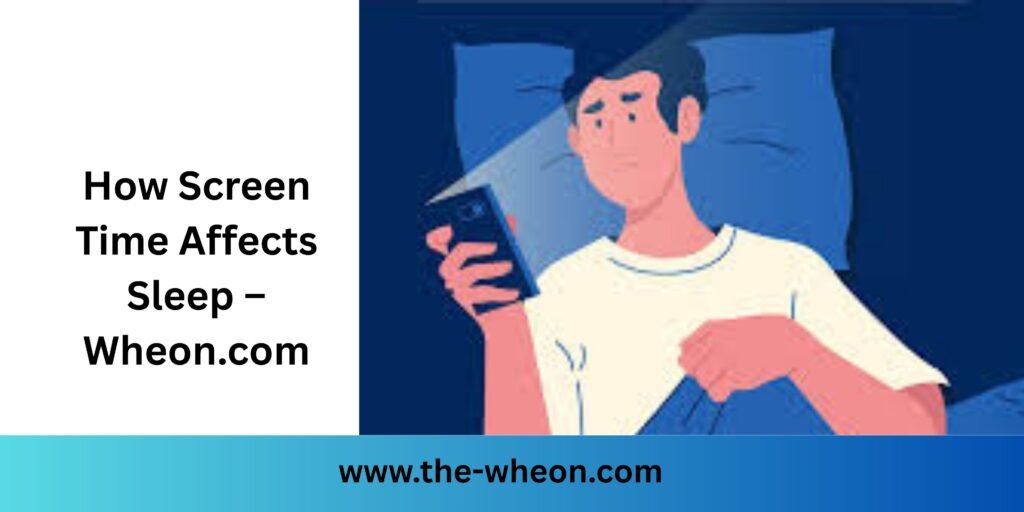
In our modern, hyper-connected world, screen time has become a constant companion. Whether it’s scrolling through social media, watching streaming video, responding to work emails or gaming late at night, our devices are never far away. But the question increasingly being asked by the‑Wheon—and by sleep researchers—is this: how does that screen time affect our sleep? And what can we do about it?
1. The Evidence: Screens & Sleep Disruption
Multiple scientific studies show a clear link between extended screen use and poorer sleep outcomes. In one study of smartphone usage in Pakistan, students had an average screen time of 147.5 hours/month and 65.7 % of them were classified as having poor sleep quality.
Another study found that each extra hour of screen use in bed increased the risk of insomnia by 59 % and shortened sleep by about 24 minutes.
For adolescents and young adults, more than two hours of smartphone use is associated with higher odds of sleep problems.
In sum: more screen time → harder to fall asleep, lower sleep quality, shorter sleep duration.
2. Why Does This Happen? Key Mechanisms
There are several ways in which screen time interferes with healthy sleep.
Blue-light exposure: Screens emit blue-wavelength light, which can suppress the body’s production of the sleep-inducing hormone melatonin, thereby delaying the natural bedtime rhythm.
Mental stimulation & content: The content on screens—games, videos, chats, notifications—keeps our brain active when it should be winding down. This can increase alertness and delay the transition to sleep.
Displacement of sleep time: Time spent on screens often comes at the expense of actual sleep time—bedtime gets delayed, or time in bed is shortened.
Sleep environment disruption: Notifications, lights, and the physical presence of a device in the bedroom can fragment sleep or make it harder to get started.
3. Implications for Health & Daily Functioning
Poor sleep isn’t just about feeling tired. Chronic or regular insufficient sleep has broad consequences:
- Reduced cognitive function: attention, memory and reaction time suffer.
- Emotional and mental-health effects: increased anxiety, irritability, mood disturbances.
- Physical health risks: elevated risk of obesity, hypertension, metabolic syndrome.
For Wheon com, which focuses on wellbeing and productivity, it means that screen-time habits are intimately linked to the quality of sleep—and thus to overall performance, focus, recovery and mood.
4. What Can The Wheon Recommend? Practical Tips
Here are actionable suggestions that The Wheon.com can share with its audience to help mitigate screen-time’s impact on sleep:
a) Set a screen-cut-off before bed
Aim to put away screens at least 30 to 60 minutes before your planned sleep time. Some experts suggest even 1–2 hours.
b) Make the bedroom a screen-free zone (or at least screen-reduced)
Charge your phone outside the bedroom, disable notifications at night, or use a separate alarm clock. This reduces sleep-environment disruptions.
c) Use “wind-down” rituals
Substitute screen time with calmer, less stimulating activities: reading a print book, light stretching, meditation or a warm bath. This helps signal to your brain that it’s time to sleep.
d) Dim lights and reduce screen brightness
Lower ambient light in the hour before bed and set device screens to warm/“night-mode” colour settings. Although some research questions the magnitude of blue-light effect in isolation, it is still a supportive measure.
e) Monitor total daily screen time, not just bedtime use
While evening usage is more directly problematic, overall heavy screen time may also shift wake-up times, bedtimes and general sleep patterns.
f) Encourage consistent sleep/wake schedule
Regular bed and wake-times help maintain the circadian rhythm, which gets disturbed by late-night screen use.
5. Tackling Common Objections & Real-World Constraints
- “I need my phone for work until late.”
The Wheon can suggest switching to audio calls or voice-only tasks that don’t require bright screens, or scheduling tech-free “buffer” time before bed even if work goes late. - “My tablet is my way to unwind.”
Recommend shifting to non-screen based unwinding: gentle music, podcasts (where screen can be turned off) or reading physical materials. - “I already use night-mode / blue-light filter; isn’t that enough?”
While helpful, filters only address one mechanism (light). They don’t fully mitigate stimulation, displacement of sleep time, or alerts/notifications. So filters should complement, not replace, behavioural changes.
6. The Wheon’s Role in Promoting Healthy Screen & Sleep Habits
As a company committed to wellness, The Wheon can package these findings and tips into its offerings:
- Offer educational content (blogs, videos, webinars) that teach about the screen-sleep connection.
- Include screen-time assessments in wellness programmes and ask clients about device habits alongside sleep diaries.
- Design challenges or habit-builders (e.g., “No screens 60 mins before bed for 7 nights”) and track improvements in sleep quality or daytime energy.
- Provide tools and checklists (screen-cut-off scheduler, night-mode guide, phone-charging-station idea).
- Partner with clients to design bedroom setups that minimise digital disruptions (e.g., use separate alarm clock, place devices out of reach).
7. Final Thoughts
In short: screen time is no longer just a question of productivity or eye-strain—it is a major component of sleep health. The science clearly shows that heavy or late-night screen use is associated with poorer sleep quality, longer time to fall asleep, and shorter overall rest.
By recognising this connection and taking mindful steps—reducing screens before bed, adjusting routines, creating supportive environments—The Wheon can lead the way in helping individuals reclaim better sleep, improved focus and stronger overall wellbeing.
Sleep is not a luxury—it’s the foundation of health. And leaving screens behind, at least for a little while each night, may be one of the most effective ways to preserve it.